

Why Fertility is Declining
Have you watched the Netflix documentary Plastic Detox?
It explores a concerning trend in fertility health globally: over the past 50 years, male fertility rates have dropped by an estimated 50%. It looks at hormone-disrupting chemicals in our environment and how they affect fertility specifically. If this trend continues, researchers warn that it could have profound implications for future generations. This is concerning, especially if it’s you and your partner trying to start or grow your family.
Improving fertility can begin long before medical intervention. It starts by creating the healthiest possible environment for your body. In this two-part series, we’ll explore how both external and internal factors can influence reproductive health.
In this first article, we’ll focus on external influences, such as environmental exposures and everyday chemicals that may affect hormone balance. In Part Two, we’ll turn our attention inward, exploring the role of diet and key nutrients that help support egg and sperm health.
Shanna H. Swan, an environmental and reproductive epidemologist, has spent decades studying this issue and believes the rapid decline is unlikely to be caused by genetics alone. Instead, increasing exposure to environmental chemicals, particularly those found in plastics, may be disrupting the hormones that regulate human reproduction. This idea is the central premise of “Plastic Detox”.
I strongly agree that our environment can have a powerful impact on fertility. However, environmental chemicals are only part of the picture. There are also practical steps couples can take in their daily lives — from reducing exposure to hormone-disrupting chemicals to improving diet and lifestyle habits — that may help support fertility naturally
Environmental Toxins & Hormone Disruptors
We can look at how toxic our world is and throw up our hands in resignation, as the task to detox the greater environment can’t be achieved in a few months. So let's narrow the focus right down to you and YOUR environment:
- What you absorb
- What you inhale
- What you injest
Understanding toxins, where they are found and what they do to our bodies helps in our understanding and alternative swaps we can start introducing.

PFAS, BPA & Other Plastics That May Affect Your Fertility
Our modern lifestyle has brought in many convenient products over the years, but now scientists are sounding the alarm. These products contain forever chemicals that are disrupting our hormonal systems. Growing research is showing that these endocrine-disrupting chemicals may be affecting fertility in men and women.
What Are PFAS and Why Are They Called “Forever Chemicals”?
PFAS- (per-and-polyfluoroalkyl substances) are a large group of synthetic petro-chemicals, valued for their heat, water and oil-resisting properties and are commonly found in:
- Non-stick cookware
- Water-resistant clothing
- Food packaging such as takeaway containers, coffee cups, microwave popcorn bags
- Stain-resistant carpets and furniture
- Some firefighting foams and industrial materials
- Cosmetics eg. mascara,foundation, gel nail-polishes
- Hygiene products eg: dental floss, toilet paper, sanitary products
PFAS are considered ‘forever chemicals’as the environment and our bodies cannot break these chemicals down easily. They build up over decades and have even been found in the soil, seas, and wildlife. Unfortunately, researchers have now detected PFAS in drinking water, household dust, blood samples and even breastmilk and the placenta
Research (https://www.niehs.nih.gov/health/topics/agents/pfc) has shown possible links to:
- Altered metabolism
- Increased chance of Type 2 diabetes
- Increased risk of certain cancers
- Lowered immunity
- Hormone disruption
- Liver and kidney damage
- Low birth weight
How BPA Affect Hormonal Balance
BPAs are another group of chemicals causing disruption to our bodies. Biphenol, especially biphenol A, is considered a hormone disruptor as it mimics oestrogen in both men and women.
Research has shown (https://pmc.ncbi.nlm.nih.gov/articles/PMC9671506/) BPA exposure is has been linked to:
- Reduced sperm concentration and motility
- Changes in testosterone levels
- Impaired egg quality
- Low sperm quality
- Increased risk of fertility difficulties
- Increased oxidative stress
- Increased risk of cancer
BPA is commonly found in:
- Food containers
- Baby bottles and sippy cups
- Water bottles
- Lunch boxes
- Water tanks
- Microwave products
- Inside aluminium cans
- Thermal paper eg till receipts
- Contact lenses
- Synthetic materials, especially some sportswear made with polyester and spandex
Phthalate Exposure
Phthalates are common everyday chemicals that also disrupt the endocrine system. They are used to give plastic more flexibility and to help fragrances last longer.
We find phthalates:
- Food storage containers
- Fast food
- Vinyl flooring
- Vinyl shower curtains
- Waterproof clothing
- Personal care products with artificial fragrance eg soap, body lotions, hair spray, perfumes, shampoo, nail varnish
- Soft plastic toys
- Teething rings
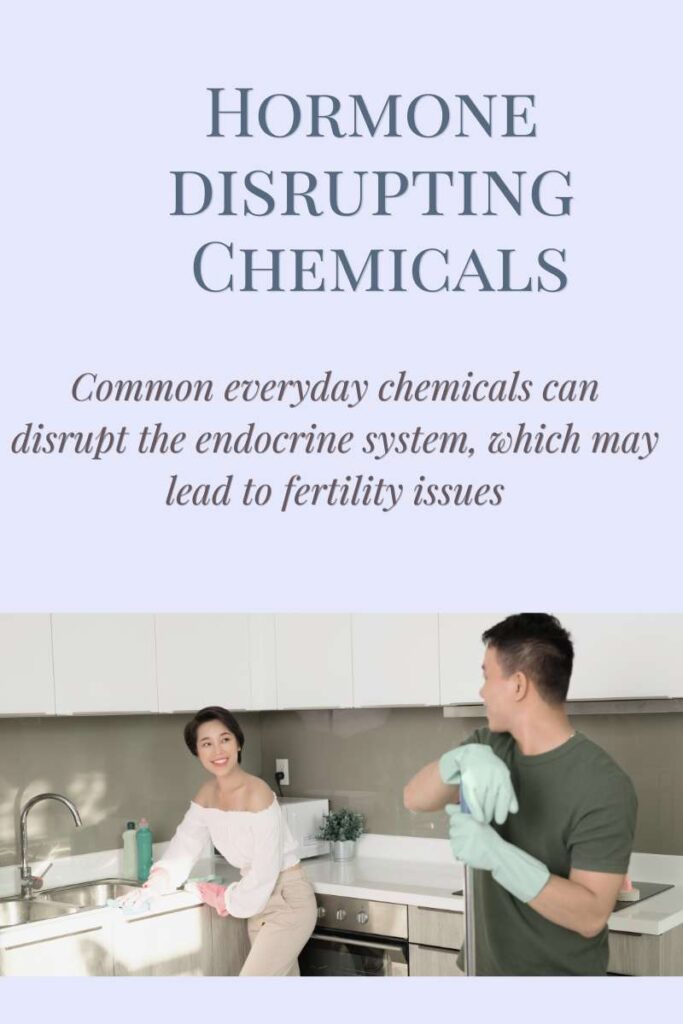
- Cleaning products, including oven cleaner, detergents, bleach, antibacterial products, floor polish, fabric detergents and softeners, glass and surface cleaners
- Air freshener products, including plug-ins and scented candles
Exposure to phthalates has been shown to:
- Disrupt metabolism
- Increase skin sensitivity
- Irritate respiratory system
- Increase risk to allergies
- Increase chances of miscarriage
- Reduce birth weight
- Increased chance of Type 2 diabetes
- Increased risk of certain cancers
- Disrupt reproductive hormones
- Reduce quality of sperm
When you think about how widely these chemicals are used and how slowly they break down, it becomes easier to understand why they are now detected almost everywhere in the environment. Many of these substances can leach into soil and water systems, where they may enter the food chain through the plants and animals we eat.
Exposure can begin as early as the womb, and because some of these chemicals accumulate in the body over time, their effects may accumulate over a lifetime. Understanding where these chemicals come from is the first step toward reducing exposure, and there are several practical changes couples can make to create a more fertility-friendly environment.
Heavy Metals & Your Fertility
While heavy metals naturally occur in the earth, heavy mining, manufacturing, and industrial pollution have increased our exposure to them.
Metals such as lead, mercury, cadmium and arsenic can enter the body through a variety of routes, including contaminated food and water, air pollution, cigarette and vape smoke, and even some household products.
Once inside the body, heavy metals may accumulate in tissues over time. Many of these metals can interfere with the hormonal system, increase oxidative stress and disrupt processes involved in reproduction.
Because these metals are present in many parts of the environment, completely avoiding exposure is difficult. However, being aware of common sources such as unfiltered water, contaminated foods, certain fish species, and older household materials, can help you take practical steps to reduce unnecessary contact and support overall reproductive health.

Chemicals in YOUR Environment & How to Reduce Them
Over the last few years, I've been making small but hopefully profound effects on my family’s health. I became aware of where the main toxins were and started making the adjustments as products ran out.
Small revisions can significantly lower your overall chemical burden over time. Let’s start by looking through your home.
The Kitchen: Food Packaging & Cookware
For many people, the kitchen is one of the largest sources of chemical exposure - just open that cleaning cupboard to see all those bottles of harmful chemicals!
Food packaging, plastic containers and certain types of cookware can release substances such as Bisphenol A and Phthalates, particularly when heated.
Additionally, some non-stick cookware coatings have historically been manufactured using chemicals from the Per- and polyfluoroalkyl substances family.
Ways to reduce exposure:
- Store food in glass, ceramic or stainless-steel containers rather than plastic.
- Avoid heating food in plastic containers
- Replace damaged or heavily scratched non-stick cookware with stainless steel, cast iron or ceramic alternatives.
- Use wooden or bamboo cooking utensils
- Use loose-leaf tea rather than teabags
- Reduce consumption of heavily packaged or takeaway foods where possible.
- Choose fresh or frozen foods instead of canned products when practical.
- Transfer takeaways out of plastic containers before reheating
- Use beeswax paper instead of plastic wrap to cover food
Small changes can make a difference over time
CLEANING PRODUCTS:
If you open your cleaning cupboard, the amount of harmful chemicals staring back at you may be a shock, now that you know where these harmful products lurk. I started my journey by swapping out cleaning products first.
Nancy Birtwhistle’s book Clean & Green is full of helpful swaps. She is all about products that are gentle on the environment; however, the consequences will extend to your health and fertility too. (You can give her a follow on Instagram too!)
Here’s a table of what I started with. I bought dishwashing liquid, green bleach, bicarbonate of soda, washing soda and vinegar in bulk. (In going green, I save a substantial amount of money each month too)
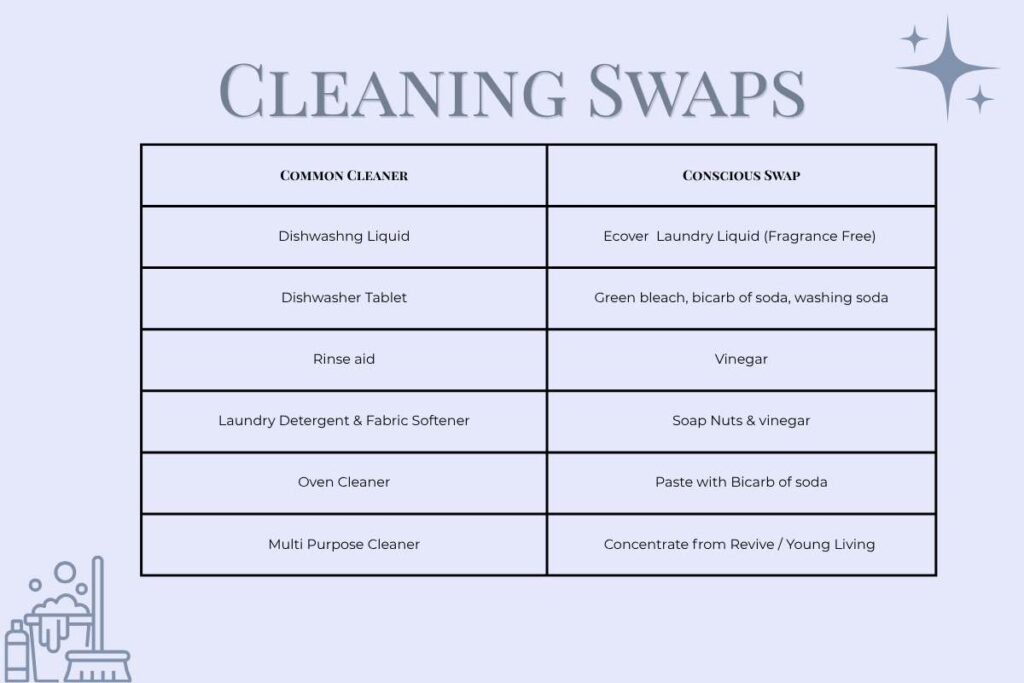
I tried out different recipes for laundry detergent and have found soap nuts to be the best option for our family. I would suggest trying out a small bag first to see if you find it meets your needs.
I use essential oils as room fresheners in diffusers, spray bottles and in some of the cleaning products I make. They are powerful and effective in cleaning, disinfecting and bringing fresh aroma into your home.
Drinking Water
Drinking water can contain trace amounts of contaminants including heavy metals, PFAS, pesticide residues and even small quantities of pharmaceutical compounds. While most are present at low levels, long-term cumulative exposure is an area of increasing research interest when it comes to reproductive health.
Trace amounts of heavy metals (Lead, mercury, cadmium etc) micro-plastics (PFAS) and trace amounts of pharmaceutical compounds have been found in our water supply. While levels are typically low, long-term cumulative exposure may affect our reproductive health. research.
Ways to reduce exposure:
Consider using a high-quality water filtration system, particularly one designed to reduce PFAS and other contaminants. We have an under- counter, reverse osmosis water filter (www.uk-water-filters.co.uk) that also re-mineralises the water.
The Bathroom: Personal Care Products
The skin is the largest organ of the body and the products we put on our skin everyday have a cumulative effect. Many of the toiletries we use contain chemicals and heavy metals that can act as endocrine disruptors and build up toxins in the kidneys and liver. These ingredients are often used to improve fragrance, texture or shelf life.
For example, phthalates are sometimes used in fragranced products to help scents last longer.
They may appear in:
- Perfumes and deodorants
- Hair sprays and styling products
- Body lotions
- Scented soaps and shampoos
- Nail varnish/gel
- Make-up and make-up brushes
- Dental floss (especially waxed)
- Toothbrushes
Ways to reduce exposure:
- Choose fragrance-free or naturally scented products where possible.
- Look for brands that are transparent about ingredient lists.
- Simplify your routine - fewer products generally means fewer chemical exposures.
- Use aluminium free deodorant
- Make your own skin care lotions and balms
- Use nail products for special occasions
- Go make-up free when possible
Personally I have found this the most challenging part of a cleaner lifestyle. I started with ditching gel nails. (I did my own nails and was never without for 7 years!) I swapped to Tropic’s deodorant, I either make my own skin care (check out www.ouroilyhouse.com) or purchase beautiful body and face balms from www.blessedbeez.co.uk
I am wearing less make-up less often, but vanity is still strong on this!

Clothing & Textiles
Clothing and other fabrics we use and wear are often overlooked as environmental toxins that can affect fertility. Think about what most of our underwear and clothing are made from. Most are synthetic fibres like Nylon, polyester, and acrylic, which are petrochemicals. Sure, they are convenient: quick drying, lightweight and crease-resistant. However, the variety of chemicals used, including dyes, plasticisers, and special finishes, can affect our level of exposure to these harmful chemicals.
Because clothing and bedding are in direct contact with the skin for many hours each day, they represent a continuous, low-level source of exposure. This may be particularly relevant during exercise or sleep, when warmth, friction and perspiration can increase the interaction between fabrics and the skin. Tight synthetic gym clothing, synthetic underwear and polyester bedding may therefore prolong contact with these materials.
While research into the health effects of textile-related chemical exposure is still developing, some fertility specialists also note that tight synthetic underwear may contribute to increased scrotal temperature, which can negatively affect sperm production. For couples trying to optimise fertility, considering the types of fabrics worn daily and those used in sleep environments may be a simple step toward reducing unnecessary exposure.
Ways to Reduce Exposure From Clothing and Textiles
- Choose natural fibres such as cotton, linen, hemp or wool where possible, especially for underwear, sleepwear and bedding.
- Opt for looser-fitting underwear, particularly for men, to support healthy testicular temperature.
- Wash new clothing and bedding before first use to remove some finishing chemicals used during manufacturing.
- Be aware of heavily treated fabrics labelled “stain-resistant,” “wrinkle-free,” or “water-repellent.”
- Consider organic cotton bedding and sleepwear where practical, as these are often produced with fewer pesticides and chemical treatments.
- Rotate out heavily worn synthetic gym clothing, particularly items that are tight and frequently exposed to sweat.
These changes don’t require replacing immediately. Instead, gradually prioritising natural fibres in items worn closest to the skin or used during sleep can be a simple way to reduce everyday chemical exposure while creating a more fertility-friendly environment. When replacing worn-out clothing or bedding, make health-conscious decisions over convenience.
It’s small changes that Can Support Fertility
We live in a toxic world where we can’t completely avoid toxins in our lives. Nevertheless, we can reduce the load by reducing our exposure, particularly in our immediate environment.
For couples hoping to conceive, creating a healthier home and lifestyle environment may help support the complex hormonal systems that regulate reproduction as well as having a body exposed to less toxins.
In Part 2, we look at another powerful factor in fertility: Eating for fertility