

If I were to ask you if you were given any nutritional guidelines, or counselling during your pregnancy, the answer will probably be no. But, maybe you were given a list of foods not to eat, with no reasons for why you should avoid those foods. I want to take you on a deep dive into those typically restricted foods.
Unfortunately health care professionals are not given much training in nutrition, especially during the perinatal period. Nutrition isn't high on the agenda when there are new procedures and techniques to master and skills to update. At your check-up appointments time is very limited. Questions don't quite reach what you're eating. If there are any unknowns, you'll just go home and check in with Dr Google.
I want you to understand why it's recommended you don't eat a certain food. What are the risks and suggested alternatives? These are important questions to consider so you can make an informed decision about your diet and well being throughout pregnancy. Small adjustments make change easier. When you understand the benefits and risks, and weigh those said risks and benefits for your own personal set of circumstances, healthy behaviour changes are easier. The pros of change need to outweigh the pros of the status quo. Only you can decide that!
Why is there a Foods to Avoid List?
So why is there a list of foods to avoid when pregnant? You're not sick.
When you're pregnant, the immune system is slightly lowered, leading your body to be slightly more compromised to food-borne pathogens. These pathogens are widespread and lead to a higher chance of infection to those with a lowered immunity, thus the Do Not Eat list was created.
I truly believe that we need to understand things before we follow or adhere to rules and regulations. You should be able to decide and choose for yourself having all the information given to you. You are an intelligent, autonomous adult with the ability to weigh up the pros and cons for ourselves. Someone's willingness to take the chance may be different to someone else's lack of willingness to take any chances.
When looking at the list of foods to avoid look at the big picture. Ask questions like , "How big is the risk and can I do anything to reduce the risk?" and "What are the benefits and risks of NOT eating this?"
Salmonella, e-coli, listeria and toxoplasmosis are typical pathogens that can be found in food and cause food-borne illnesses. The most common of these pathogens is listeria.
Listeria
Listeria is a bacteria that is found in untreated water, soil and sewage. The bacteria is passed on to plants and animals and can be passed onto humans through eating the infected food. One of the problems with this pathogen is it can manifest weeks, even months after exposure, making diagnosis more difficult. In pregnancy, it is most commonly seen during the 3rd trimester.
The higher risk foods are:
- refrigerated smoked fish
- raw milk
- soft/raw cheese
- ready-to-eat meats
The symptoms of listeriosis can include:
- temperatures
- body aches
- nausea
- vomiting and/or diarrhoea
In more severe cases sepsis can occur in the mother and be transferred to the unborn baby which may cause preterm birth, illness in the newborn or pregnancy loss. If you have any symptoms which aren't improving within 48 hours, or you are getting worse, call your midwife or consultant promptly.
To bring some perspective, between 2008-2018, there were 166 cases per year within the general UK population. Between 2020-2022 only 14 cases were treated. As you can see listeriosis is rare in the UK (0.1-10 cases per million). Of those cases however, 1 out of every 6 cases occur in pregnant women. Diagnosis is through a blood test, with treatment using antibiotics.
Can I Eat Soft Cheese

Who doesn't love cheese? As a doula, many of my clients have found soft, mild cheese in the first trimester quite tolerable when struggling to keep food down. Examples of soft cheese include cottage cheese, ricotta, mozzarella, brie, Camembert. Here are the numbers which, as you can see, are slightly overkill to go on a 'do not eat' list : The risk of listeria is 1 in 1.1 million servings of unpasteurised soft cheese, or 1 in 56 million servings of pasteurised soft cheese. By heating these cheeses to steaming will destroy bacteria, reducing the risk of listeriosis even more!
Soft cheeses are nutrient dense, being quite high in:
- protein needed for tissue growth and repair
- calcium for strong bones and teeth
- Vitamin A is essential for healthy development of heart, lungs, kidney, brain and nerves, bones and eyes
- Vitamin B12 needed for brain and nervous system development in early pregnancy
Many cultures use these types of cheeses in their everyday eating. Avoiding it, especially in the first trimester can lead to nutritional deficiencies which can affect you and the well being of your developing baby.
Other alternatives to consider instead of totally excluding these cheeses is to:
- reduce how often it is consumed
- Buy fresh and consume within 2-3 days
- Keep at a constant temperature of 3'C (keep at the back of the fridge rather than the door)
Can I Eat Store-bought or Ready Made Meals?
Who doesn't love a ham and cheese toastie, or a smoked salmon bagel for lunch? Buying a ready made sandwich or salad from the grocery store can save you a lot of time and hassle, right?Sometimes you're out longer than expected,and grabbing a ready made meal is convenient as well as preventing you from passing out from low blood sugar.

If you are buying a store-prepped or ready made meal, there is a higher risk of bacterial contamination. With the fridge being opened and closed several times a day, the food is subject to temperature changes which can cause it to become more susceptible to harmful pathogens. Some deli-style stores offer a build-your-own salad bowl or wrap. Think about how quickly the food is used up (hours vs days) and how many different people are touching the food. Food safety and quality control is of a very high standard in the UK, and most restaurants have a rating which you can check before you even walk into their store.
It important that you weigh up the risks of not eating at all (falling blood sugar levels) vs eating a ready made tuna salad (blood sugar levels remain constant and your body and baby are nourished). Here's a tip for you if you choose to grab meal deal: Take your chosen food from the back of the fridge where there is a more constant temperature being maintained.
A safer alternative is to buy your own raw ingredients to make your own salad or wrap. By maintaining a constant temperature, and eating these foods within a couple of days, you will help lessen the risk of contamination.
Can I Eat Sushi?
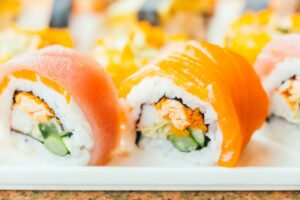
Sushi has become very popular in the West, while many Eastern countries eat sushi as part of their staple diet. It is a very healthy and nutrient rich food. However there are risks of salmonella or novovirus contamination, BUT the risks are extremely low. There are stringent food-safety guidelines, for example any raw fish needs to be flash-freezed to kill any bacteria .
Fish is an important food source to include in the diet. It is high in:
- protein for tissue growth and repair
- iodine maintains mother's thyroid and develops baby's thyroid, it helps with normal growth and cognitive development of the baby.
- Vitamin B12 for brain and nervous system development
- Vitamin D needed to maintain calcium levels, helps prevent hypertension and gestational diabetes
- Omega 3 promotes healthy brain development and cognitive functioning
- calcium needed for strong teeth and bones
- selenium increases the body's immune system. Low levels of selenium is linked to low birth weight.
If you want to eat sushi, buy it from a reputable supplier. When making your own sushi ensure it is kept at 4'C at all times. Another option could be choosing a cooked sushi (nigiri-zushi) vs raw (sashimi).
Can I Eat Deli Meats and Cold smoked fish?
Many pregnant woman prefer cold foods over hot as it tends to be more tolerable, especially if you are struggling with morning sickness or hyperemesis gravidarum. It is also an affordable animal protein source.
The main concern for deli meats and smoked fish is listeria. HOWEVER, when you look at the big picture, the risk is 1 in 83,000 servings! That's a lot of red tape for such a low risk. To reduce this risk further, heating luncheon meats and smoked fish to steaming, reduces your risk even further.
Can I Eat Eggs?
Eggs for breakfast! Yum! What could be nicer that poached eggs on toast? Have you been told not to eat eggs that have a runny yolk? The risk is salmonella poisoning which is even less than contracting listeria!

Eggs are easy, accessible, tolerable proteins that are rich in nutrients. Having eggs for breakfast is a great option if you are trying to control your blood sugar levels, and want to avoid the typical cereal, toast and fruit juice breakfast.
90% of all eggs in the UK are under the British Lion food safety scheme. The Food Safety Agency approves the consumption of runny, even raw eggs that carry the British Lion mark. If you want to reduce your risk further, you can buy organic eggs, making sure they are clean and crack free. Cook eggs well making sure the yolk is firm. Keeping the eggs at 4'C in the fridge, and eating them within a week will also ensure your safety.
Can I Eat Fish?
Fish is another nutrient rich food, high in essential Omega 3 oils that is essential for brain development. Fish is an important food source similarly the type of fish you choose to eat is important
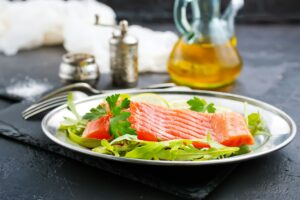
too. Mercury toxicity can cause serious birth defects, and the high mercury fish are the predatory fish, for example shark, marlin, yellow-fin tuna. The risk of not eating fish at all can lead to micro-nutrient deficiency. Avoiding or limiting predatory fish, and opting for low mercury fish like:
- salmon
- trout
- cod
- sole
- sardines
- tuna
- mackerel
Can I Drink Tea and Coffee?

We start the day with a tea or coffee. We reach for coffee when we hit that mid-morning slump. We connect over tea in a coffee shop. Drinking tea and coffee is part of our culture. So what's the deal with pregnancy and our favourite beverage?
Evidence from research is inconclusive. There are a lot of unknowns and hypotheses around caffeine during pregnancy. What is known is that caffeine does cross the placenta barrier, and the placenta and developing baby have no enzymes to metabolise it. Researchers just don't know if there is a sensitive developmental window that high amounts of coffee could interrupt or even harm.
If you think about being pregnant in your first trimester, you may have had an aversion to the metallic taste in your tea. Maybe you went off coffee because its smell was too overpowering. Going off caffeine may be your body's natural defense in protecting you and your newly formed baby. Because of all the unknowns around consuming caffeine, it is recommended to consume 200 mg of caffeine per day.
Our Everyday Tea (black tea) contains 50 mg of caffeine, while green tea has 25mg caffeine. Rooibos tea contains NO caffeine and could be a good alternative.From my experience, I'd say rooibos is an acquired taste; I started off by mixing 1 teabag of regular Ceylon tea with 1 teabag of rooibos.
Depending on the brand, one teaspoon of instant coffee contains between 30-90mg caffeine, so read your labels and choose accordingly. It makes no difference in how much water or milk you add to your cup, the amount of caffeine will stay the same.French press coffee has around 80-100 mg of caffeine. Filter coffee and an Americano contain between 94-150 mg caffeine while a small, single shot cappuccino has around 65 mg caffeine.
What is known from human studies is that increased amounts of caffeine can lead to IUGR (Intrauterine growth restricted restriction), miscarriage, low birth weight. increased risk of overweight and impaired cognitive development in childhood. (See article here)
As with anything, the final decision of what you do, and what you put into your body, is yours. To be told NOT to eat something with no reasons given takes away your autonomy. They have control over you. When you understand the risks and benefits of doing or not doing something, that is making an informed decision. The choice is yours. You have the right to choose. Ask questions, do your own research, and do what you feel is right for you.